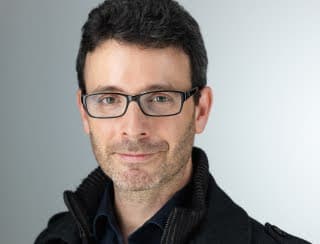


Boris Abramovich Gelfand was born to Belarusian Jewish parents in Minsk, in the Belorussian Soviet Socialist Republic, on 24 June 1968. He achieved the title of chess grandmaster before moving to Israel in 1998. Gelfand has since represented Israel in international competitions and raised his own family in Rishon Letziyon.
What attracted me to his story was not just the fact of his success—there are four undisputed Jewish chess world champions—but of its similarities to Vladimir Nabokov’s narrative of the life of a fictional Grandmaster, Luzhin, in his The Defense (1930). World champion is a title Gelfand, like Luzhin, never held, though for years he was among the top competition.
A film was made about Gelfand’s father’s unique support of his son, which received major international recognition and won the Wolgin Best Director of Documentary Film Award at the 2013 Jerusalem Film Festival. The movie details his father’s collection and organization of memorabilia into sixty photo-albums—train tickets, itineraries, notes in the margins. Gelfand spoke about the movie in a 2015 interview, saying “My father was a perfectionist—he was an ultimate perfectionist in fact. He sometimes spent several days in order to make one page of this album. He aestheticized it in different ways…My father’s support did a great thing to me.” Gelfand’s father’s parenting displays the Soviet Jewish mindset, where studying hard and mastering a field was instilled as the way of life. Gelfand is the culmination, in that sense, of a great Jewish tradition and culture.
Both Gelfand and Luzhins’ fathers were eager to nurture a talent they perceived in their respective children (this is the central theme of the first act of Nabokov’s novel). Gelfand says that his upbringing was typical of a family of Jewish intellectuals, that his father went to great lengths to acquire chess books for him. Then he tells a story: “One day my dad went to work and told me: ‘Let’s study chess.’ ‘No, no, I don’t want to’ – I replied. He thought I am no longer interested, but it turned out… while he was at work I read the book up to the end.” The story Nabokov tells about Luzhin Sr.’s discovery of his son’s chess-playing skills is as identical as biography can be to fiction. Luzhin’s father returns home late one night and says to his son, “Do you know what? Let’s play some game. For instance, how about me teaching you chess?” (pp. 63). Unbeknownst to him, Luzhin had already developed to prodigious levels as a chessplayer, and defeated his father with ease.
Gelfand and Luzhin’s playing styles align significantly; both are staunchly logical players with an uncharacteristic propensity for making sacrifices leading to wins. In Gelfand's appearance at the USSR Championship held in Odessa in 1989, he shared second place with three others, earning a prize for “greatest amount of material sacrificed in the course of a tournament” (Taimanov, 1998). On page 134, Nabokov gives Luzhin the broad strokes of an identical win, after sacrificing in succession the Queen, the Rook, and the Knight.
In his well-accepted theoretical chess workbook Attack and Defence, Jacob Aagaard comments on Gelfand: "…Gelfand is not a natural attacker; instead he is a deep strategic player who likes to get into the logic of a position—and to keep control” (Aagaard 2014). Of Grandmaster Luzhin, Nabokov writes simply that he “…imperceptibly earned the reputation of a cautious, impenetrable, prosaic player” (pp. 97).
Luzhin reflects a similar Jewish intellectual background to Gelfand, where intense devotion to study shapes a person’s entire life. Obsession in Nabokov’s novel can also be understood as a critique of the Eastern European values tied to discipline and inward thinking.
Gelfand is an extraordinary and prolific Jewish chessplayer; Luzhin’s story—had it succeeded the former—is close enough to Gelfand’s to have mimicked a loose dramatization. While Nabokov was not himself Jewish, he raised a Jewish son with his wife Véra. His narrative in The Defense traces the inner workings of a genius of Gelfand’s caliber, and Gelfand’s upbringing and success display the ferocity of the Soviet Jewish mindset.
Powered by Froala Editor