


The snow crunches under my boots. It’s a frigid Montreal day. I enter my apartment, still frozen, and make a beeline for the fridge. At last, the anticipation ends.
I crack open three jars of pickles that have been waiting patiently for me. The aroma hits instantly: tangy vinegar, sharp dill, and a punch of garlic. The cold clinging to my skin instantly evaporates. Suddenly, I am transported back to my childhood – snacking on pickles as a Shabbat dinner appetizer, alongside apples and honey on Rosh Hashana, and as the green vegetable on my Passover seder plate (the Israelites’ tears tasted through the saltiness of each bite)
But how did we get here? How did pickles become such a Jewish staple?
The story of Jews and pickles dates all the way back to slavery in Egypt. As the Israelites wandered the desert, they lamented, “We remember the fish that we used to eat free in Egypt, the cucumbers, the melons, the leeks, the onions, and the garlic” (Numbers 11:5). But it wasn’t the snap of a fresh cucumber that the Israelites were missing; Ancient Egyptians are believed to have fermented cucumbers to mask their bitterness – a flavour profile the Israelites yearned for even after gaining freedom.
For generations, pickled foods made up a significant part of Jewish diets. In shtetls, pickling wasn’t just a culinary preference, but a necessity. Pickling provided an affordable way to preserve food through harsh winters and offered economic opportunity, with Jewish women selling barrels of pickles at the marketplace.
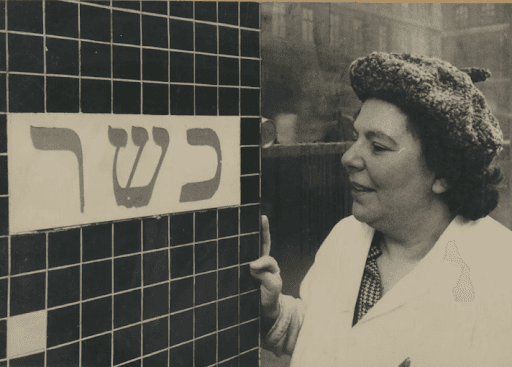
In Europe, non-Jews typically used vinegar as their main pickling agent. For Jews, however, vinegar was too expensive to use on a regular basis. Instead, they relied on a simple brine of salt and water. Over time, they added dill and garlic to the mix, and thus, the “kosher dill”, as we know it today, was born.
Given this rich and salty history, it feels right that I, an avid pickle enthusiast, conduct a comprehensive review of my own. Which pickle has the best crunch? The perfect balance of salty versus sweet? And, most importantly, which pickle most accurately captures that cherished pickle-eating-Jewish-feeling?
I began with President’s Choice’s bread-and-butter pickles. Don’t be fooled by their flimsy appearance – these slices deliver a serious crunch. While the PC branding wasn’t particularly exciting, it didn’t detract from my enjoyment of the sweet flavour profile. That said, the sweetness bordered on overpowering, lacking the saltiness required to qualify as a true Jewish pickle.
Next up: Grillo’s. Before even taking a bite, I admired the packaging. What could be better than a cartoon pickle, in sunglasses, lounging on a lawn chair? A closer look into the translucent jar revealed minced dill floating in the brine, preparing my taste buds for what was to come. The crunch of the first bite echoed off the walls. The rich combination of salt, dill, and vinegar didn’t just meet my expectations – it surpassed them.
Moishe’s pickles were next. As for evoking the Jewish feeling – well, it’s right there in the name. In 1938, Moishe Lighter opened Montreal’s iconic Moishe’s Steakhouse, where deli-style pickles quickly became a staple of the dining experience. Now packaged and sold across Canada, these pickles are a Montreal delicacy. With their signature ridges, Moishe’s pickles have a firmness that results in a satisfying snap with every bite. Though slightly too garlic-forward for my liking, they embody the class kosher dill we know and love.
As I tried to pick my favourite pickle, I found myself in a pickle of my own. Although I loved them all, one thing is certain: pickles are my comfort food, keeping me warm amidst the bitterness of winter. Standing in my kitchen, my heart is full. My stomach is satisfied. And as someone whose Jewish identity is deeply rooted in its food, I feel that indescribable sense of what it means to be Jewish.
Powered by Froala Editor