

On April 11th, 1961, Adolf Eichmann was put on trial. For nine months, the whole world watched as Holocaust survivors broke the silence and testified against the man who ordered their deaths. This trial brought the Holocaust into Jewish homes with an intimacy that the brief newsreels or articles could not do. As these families sat around their television sets, something began to shift. Sixteen years of assimilation and looking to the future collided with the catastrophic past.
Among the millions that tuned in to watch were Jeffrey Ross Hyman and Thomas Erdelyi, later known as Joey and Tommy Ramone. Erdelyi survived the Holocaust himself, and the trial likely disrupted the sense of stability the two had created in Queens, causing them to get together and form the Ramones. How could they take part in the cultural flourishing of the 1960s when their people had been systematically murdered a few years before?
With no established space for young Jews to navigate the feelings raised by Eichmann’s trial, Hyman and Erdelyi created one in Forest Hills, Queens. In 1974, that space took form as the Ramones.Their sound was raw, fast, and confrontational. Their biggest song, “Blitzkrieg Bop,” hints at Nazism, and the lyrics channel anger against the people who tried to eliminate them.
The Ramones’ punk rock style reflected an inclination toward chaos, a response to the deeply Jewish question: “How do we respond when the world seems broken and without order?” This question sits at the center of Jewish mystical thought: Kabbalah. The spirit of the Ramones and other post-Holocaust Jewish American artists is reflected in a perhaps unexpected place— the writings of Rav Avraham Yitzchak HaCohen Kook, referred to as Rav Kook.
In his main work, Orot HaKodesh, Rav Kook explores the relationship between chaos (tohu) and order/repair (tikkun), recognizing different levels of both. There is “low tohu”, the desire to destroy an existing order with no plan to rebuild, and “high tohu”, the desire to destroy the order with the intention to rebuild. On the other hand, there is “low tikkun,” an order that cannot handle any chaos or revision, and also “high tikkun,” an order sophisticated enough to integrate chaos.
The Ramones lean toward “low tohu.” Their raw, unrefined style strips songs down to their bare elements, just as “low tohu” tears down the existing order. Their chaotic sound challenges the idea of the post-World War II American utopia, embracing chaos as a response to disorder.
But another Jewish kid from Long Island, processing the same events, made a seemingly different choice.
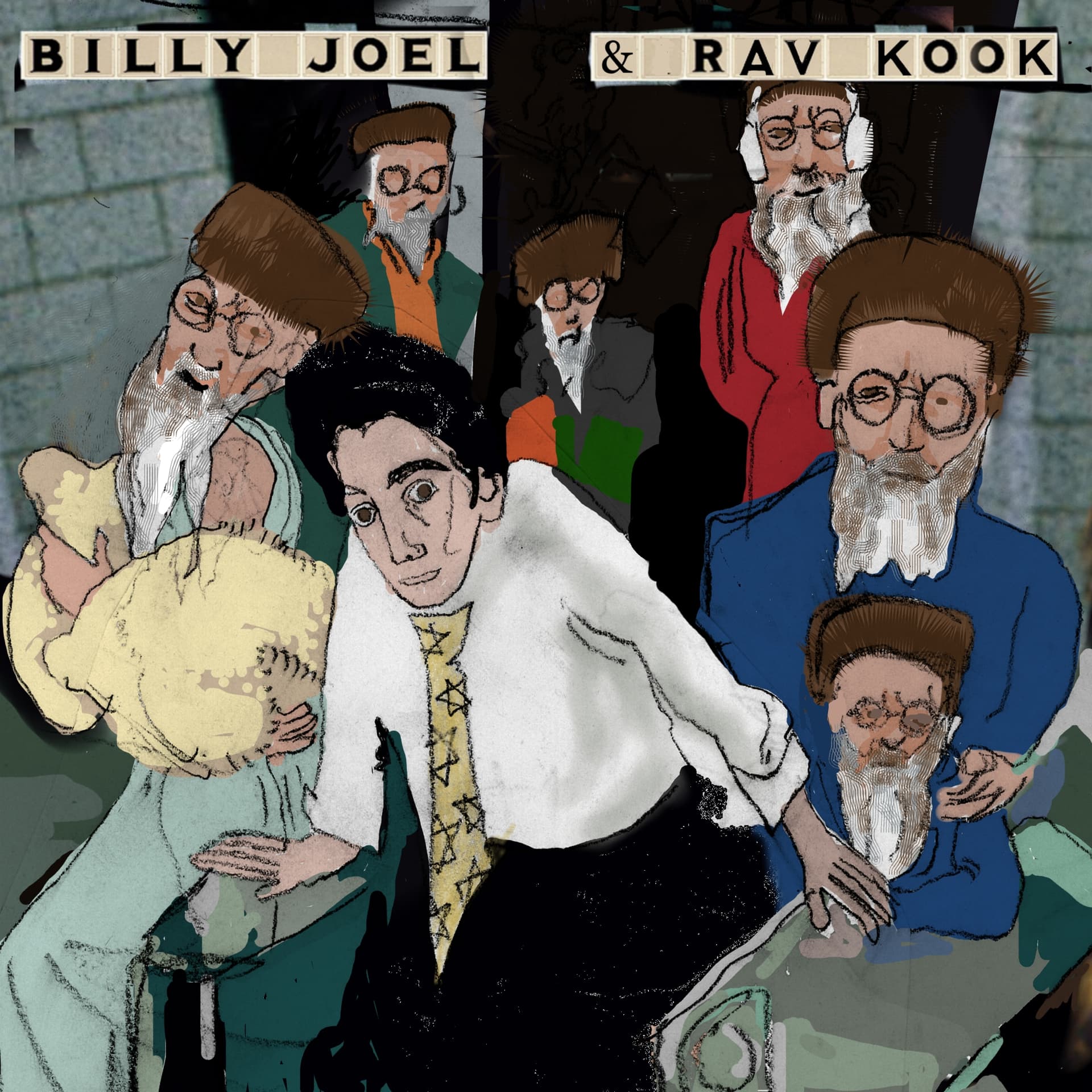
At first glance, Billy Joel is rarely discussed alongside the Ramones and other punk artists; his piano pieces and radio hits appear to be the opposite of punk anthems. However, Joel’s music could embody “low tohu” as well. Just as the Ramones challenged the status quo through their musical style, Billy Joel does the same lyrically. Many of his hit songs aren't the celebrations of American life that people often think they are. They’re heavy critiques of it. Joel sings about people trapped in their jobs, failed dreams, and nostalgia. While his melodies are catchy, his message is bleak and real, often highlighting problems in society.
He’s not offering a hopeful message; he’s exploring the aftermath of what Rav Kook calls a “rupture.” While the Ramones expressed this realism through musical style, Billy Joel expressed it lyrically. Both refuse the comfort of the “tikkun” facade of post-World War Two optimism. Joel’s 1977 hit “Movin’ Out,” for example, strongly critiques the lifestyle that the “American Dream” forces many into behind a positive soft rock melody.
Rav Kook's teachings reveal that the refusal to accept normalcy is theological honesty. In the aftermath of catastrophe, the first Jewish response shouldn’t be a quick repair. It has to be the acknowledgement of the situation, and the acceptance of the chaos or tohu. The Ramones and Billy Joel, in their own dialects, did this work. Only by sitting in an uncomfortable place of “rupture”, Rav Kook suggests, can we eventually move towards fixing.
Powered by Froala Editor