

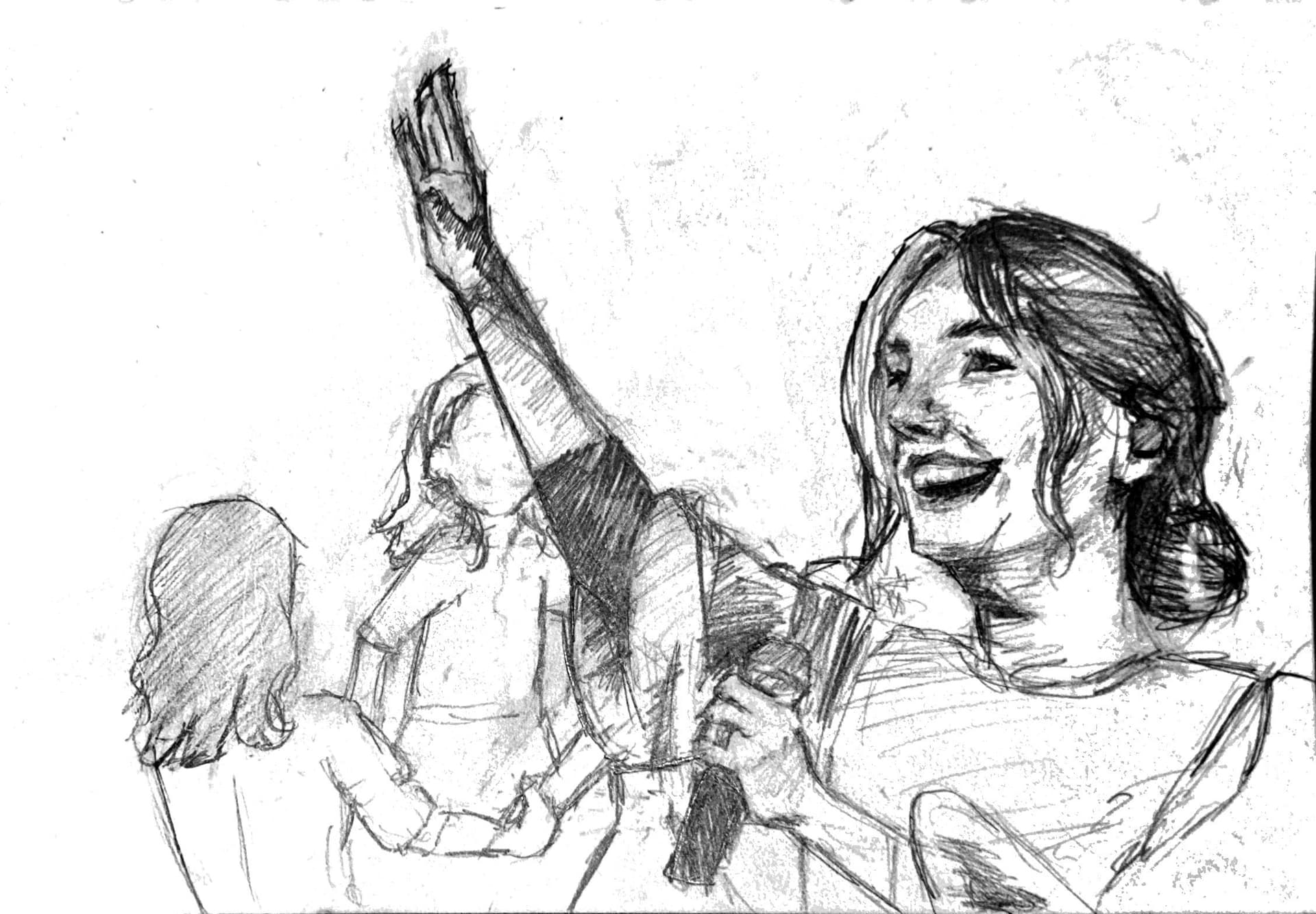

This past Monday, the McGill Jewish Studies department hosted Jessica Roda, an anthropologist and ethnomusicologist currently teaching at Georgetown University. Speaking about her new book, For Women and Girls Only: Reshaping Jewish Orthodoxy Through the Arts in the Digital Age, Roda presented her ethnographic findings about Orthodox women redefining the idea of modesty. Through art and digital media created by and for themselves, these women challenge and uphold tradition while adhering to kol isha, the law that prohibits women from singing or performing in front of unrelated men.
Roda opened by providing four examples of Jewish Orthodox women’s presentation in media created by women within and outside the community. She compared the Netflix series Unorthodox, two songs by Chayala Neuhaus, and the short film Castles in the Sky by Pearl Gluck. Neuhaus sings neither of her songs; one was performed by a man and the other by Bracha Jaffe, a famous female singer in the Orthodox community. Roda pointed out that contrary to Unorthodox, where women are stifled and unable to create art within the Haredi community, Neuhaus built a career in music composition while remaining modest; she does not show her face or present her voice.
Further examples include creators such as Toby, who does not present her voice, image, or even her name to maintain her modesty, and the previously mentioned Bracha Jaffe, who challenges modesty rules by performing on stage but vets her audience members to ensure only women attend her concerts. Either way, these women are publicly and monetarily successful, allowing them to build careers from their music.
The talk continued with the presentation of Roda’s findings within Montreal and New York City’s Orthodox communities, where women and girls create media for each other, often labeled “For Women and Girls Only.” These women turn censorship around – instead of women being responsible for hiding themselves or not performing, it is men’s job not to look. Many of the recordings shared between women and girls within these communities are often not publicly available, instead being disseminated in a variety of ways including being shared via email, WhatsApp, and special phone lines that girls and women can call to listen in.
Another way women creators and composers share their music is by having men sing their compositions. This is the case with Chayala Neuhaus. The version sung by men is publicly accessible, whereas the version sung by women is shared within the private spheres between frum women. In the home and private studios, girls and women are able to create and professionally record their own songs to share. Some girls even create songs in the private studios of their camps or schools to be given as gifts to other girls.
Modesty is still essential to how these women are presented, even when their names, voices, and faces are visible within their own communities. Roda discussed two interviews in Orthodox magazines where Toby and another musician, Rochel Leah, whose real name was used, are both positioned as devoted mothers, dedicated to their families and the maintenance of their homes. These interviews reveal an important dichotomy within the world of frum music which is made for and by frum women. They challenge the status quo through their innovation and by making, creating, and enjoying music from and for each other, but they must package themselves in a certain modest and gendered way.
Roda’s talk and book give insight into a significant but little-known aspect of Orthodox women’s lives. The duality presented in her research highlights the balancing act between accepting traditional gender roles and challenging them that all women face in the digital age.
Powered by Froala Editor