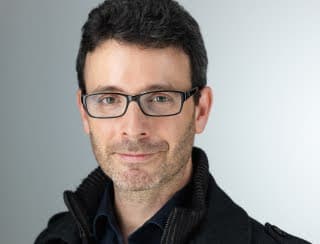


In his book Who Gets In, Norm Ravvin, writer and professor of religion at Concordia University, explores his own family’s immigration story from Poland to Dysart, Saskatchewan. Ravvin’s grandfather, Yehuda Yosef Eisenstein, chose this remote community upon his arrival to Canada in 1930. Though isolated from the major metropoles like Montreal or Toronto that also received large waves of Eastern European Jewish immigration, Dysart boasted a sizable Jewish population, appealing to Eisenstein. Eisenstein soon became known locally as a reverend and teacher, operating out of Dysart’s synagogue. Through his reflective writing, Ravvin brings the reader along Eisenstein's journey as a Jewish leader who embraces his identity in a foreign, and perhaps unlikely, setting.
In an interview with Nu Magazine, Ravvin recalled the seven-year research process of uncovering his family’s past. Growing up, his family was almost entirely unaware of the details of his grandfather’s true story, and the mystery inspired curiosity in a young Ravvin. By the time he began his research, he was already an established historian with access to resources and archival outlets to help him piece together this family history. Throughout the project, Ravvin collaborated with the Canadian Jewish Archives in Montreal, as well as the Jewish Archives in Winnipeg, and the National Archives in Ottawa.
While Canada’s Jewish history often focuses on the commercial success in Montreal or Toronto, a small but significant Jewish population lived in the prairies, especially in Winnipeg. Ravvin reflected that “the prairies are unusual. There’s a real checkerboard of ethnic communities, living near and interacting with each other.” Much of this cultural diversity came about through industry, with farming and trade comprising a large part of the economy.
Although English was the dominant language in Western Canada at the time of Eisenstein’s migration, Dysart had a unique Yiddish-speaking community. Because Dysart and other Jewish centres were so isolated, Yiddish and Jewish culture persisted longer, with less pull to assimilate than in urban areas. As Ravvin puts it, “pressures were always better in the cities to build yourself into what you were surrounded with.”
Eisenstein, however, did the opposite, moving to a smaller isolated area and influencing his surroundings. Another important forum for communication in remote prairie towns was the written word, specifically letter writing and the printed Yiddish press. Reverend Eisenstein (his title as he wasn’t formally a rabbi) would write letters informing friends of what was going on in Dysart. Letters travelled to and from Winnipeg easily, arriving by train to the post office near the Jewish colony, where they were received by the postmaster – who was himself often Jewish too.
The telegraph office was also nearby in town, facilitating the transmission of ideas and cross-province communication for Dysart’s Jewish residents. Eisenstein also published updates about the synagogue and school goings-on in Winnipeg’s Yiddish periodical, Das Yiddishe Vort (The Yiddish Press), doing everything in his power to grow his community and promote their Jewish values.
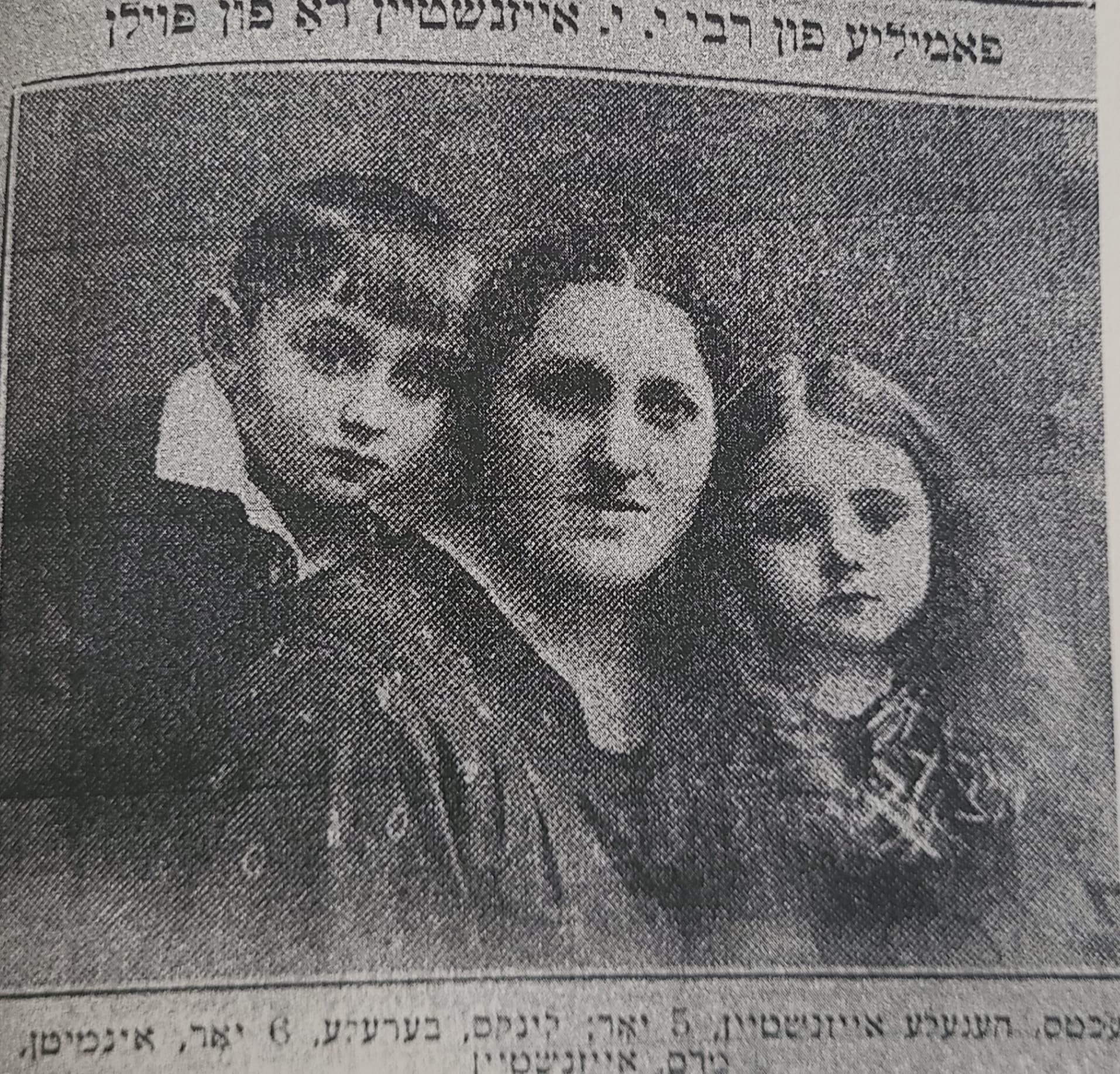
A key component of Who Gets In are the family photographs included throughout. In family portraits taken in Polish studios, Ravvin’s family exudes pride and elegance – attributes not typically ascribed to Eastern-European Jews fleeing oppression. This is not a familiar story of poverty and displacement, as seen in a dramatized shtetl tale like Sholom Aleichem's Fiddler on the Roof.
Rather, as Ravvin explains, his family “didn’t flee pogroms and they weren’t poverty stricken… our family in Poland before the war was pretty middle class, so they were able to take a lot of photographs.” In this way, Ravvin’s family narrative paints a clearer picture of the diaspora, revealing the range of roles Jews held in society, starting with the intimacies of family life and the smart fashions adorned by the matriarchs.
Eisenstein's story offers a unique snapshot into Jewish life in Canada’s prairies, differing vastly from familiar accounts of immigrant families in the larger metropolitan areas full of larger Jewish communities Not all immigrants during this period retained as much religion or language as Yehuda Yosef Eisenstein. Many even changed their names to something less overtly Jewish. Still, Eisenstein’s journey exemplifies a Jewish dedication to community building, even beyond the European homeland.
If you too are interested in learning more about the intricacies of Eisenstein’s life, or the family tensions that followed, don’t hesitate to dive into Norm Ravvin’s acclaimed work, Who Gets In, available on Amazon or in bookstores near you.
Powered by Froala Editor