


As we drove into the valley, clouds descended upon us. Through the fog I caught glimpses of buildings from centuries past, and the streets were eerily barren for a late weekday afternoon. When we stepped out of the car, two young boys came running towards us. “Shalom!” they shouted, excited to see visitors. I responded in Hebrew, but they could not understand. My driver addressed them in Azeri. “They want a picture,” he said, translating back to me.
I landed in Baku, the capital of Azerbaijan, that morning, after a long overnight flight. Jet lag was running high, but my exhaustion slipped away as soon as we entered the mystical town I had read so much about. Here I was, in Qırmızı Qəsəbə—the world’s last surviving shtetl, and one of the few remaining communities of Mountain Jews in the world. Most residents had moved to Russia or Israel in the decades prior.
The “Red Village,” as the locals call it, didn’t look too different from the predominantly Muslim town of Quba across the river. Both resembled your typical Eastern European village, except for the occasional minaret (mosque tower) in the latter. It wasn’t quite the image one associates with the shtetlekh of old. As we drove along a modern asphalt road, my guide pointed out the ornate, newly constructed, gated residences lining the street. “They have a lot of money here,” he remarked, referring to the wealth that former residents send home after finding success abroad.
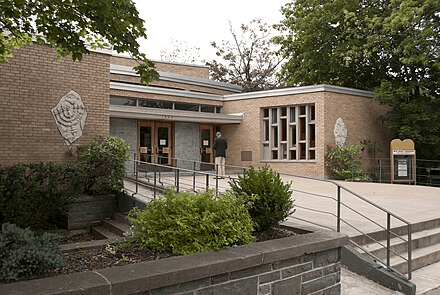
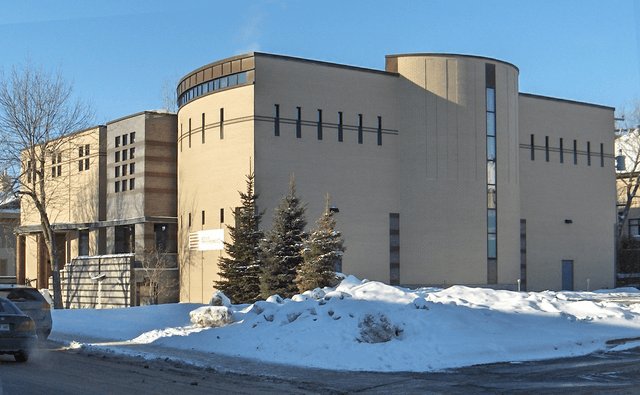
There are two synagogues in the Red Village, though both are closed to the public. Even in a country often cited as an example of Jewish-Muslim harmony, police in camouflage stood guard at the entrance. Still, as I walked around the buildings admiring the architecture, I could not help but notice that I felt perfectly safe wearing a kippah in public.
The main attraction in the otherwise quiet town was the Museum of Mountain Jews. Upon entering, I was greeted by the flags of Israel and Azerbaijan at the reception desk. Once a synagogue, the interior of the building preserves its original design: benches face a now-empty Torah ark and quotes from the Tanakh encircle the domed ceiling. The exhibits were off to the side of the sanctuary and on the upper floor in neatly curated displays.
A young woman there was happy to show me around. But beyond the museum’s collection of Judaica and personal documents (mainly ketubot and gittin), what I found even more valuable was our conversation. She spoke four languages —Azeri, Judeo-Tat, Russian, and English —in addition to a little Hebrew. Born in Qırmızı Qəsəbə, she had moved to the city for her studies before deciding to return to teach others about her culture. This decision was uncommon, she admitted, as the community continues to shrink and many residents see little future in their hometown. Those who remain, however, are proudly Jewish and Azeri.
An entire section in the museum is dedicated to Mountain Jewish contributions to Azerbaijan and the world. One name appeared again and again: Albert Agarunov, a Mountain Jewish soldier who was killed in action during the first Nagorno-Karabakh War and posthumously declared a national hero. Other figures include Israeli singer Sarit Hadad and football player Lior Refaelov.
Qırmızı Qəsəbə is far more connected to the rest of the country—and the wider world—than I had expected. I had mistakenly assumed that the community’s survival into the modern era meant it must be insular and sheltered. From the children who greeted me in Hebrew to the kind woman in the museum, the people of Qırmızı Qəsəbə are far more welcoming to tourists and outsiders than I had given them credit for. But there was nothing physically gating off the village from the rest of Azerbaijan and the locals had access to whatever trends were trickling into a rapidly modernising country. By writing about my visit to a place that had occupied a legendary space in my head for years, I hope to preserve an account of life in the Red Village in the 2020s for future generations.
Powered by Froala Editor