

Mile End, located in the Plateau-Mont-Royal borough of Montreal, is a neighbourhood renowned for its cultural diversity and neo-bohemian environment. Historically an immigrant neighbourhood composed of diverse cultural and ethnic groups, Mile End underwent significant changes in the 1980s and 1990s due to gentrification, marking a post-industrial shift.
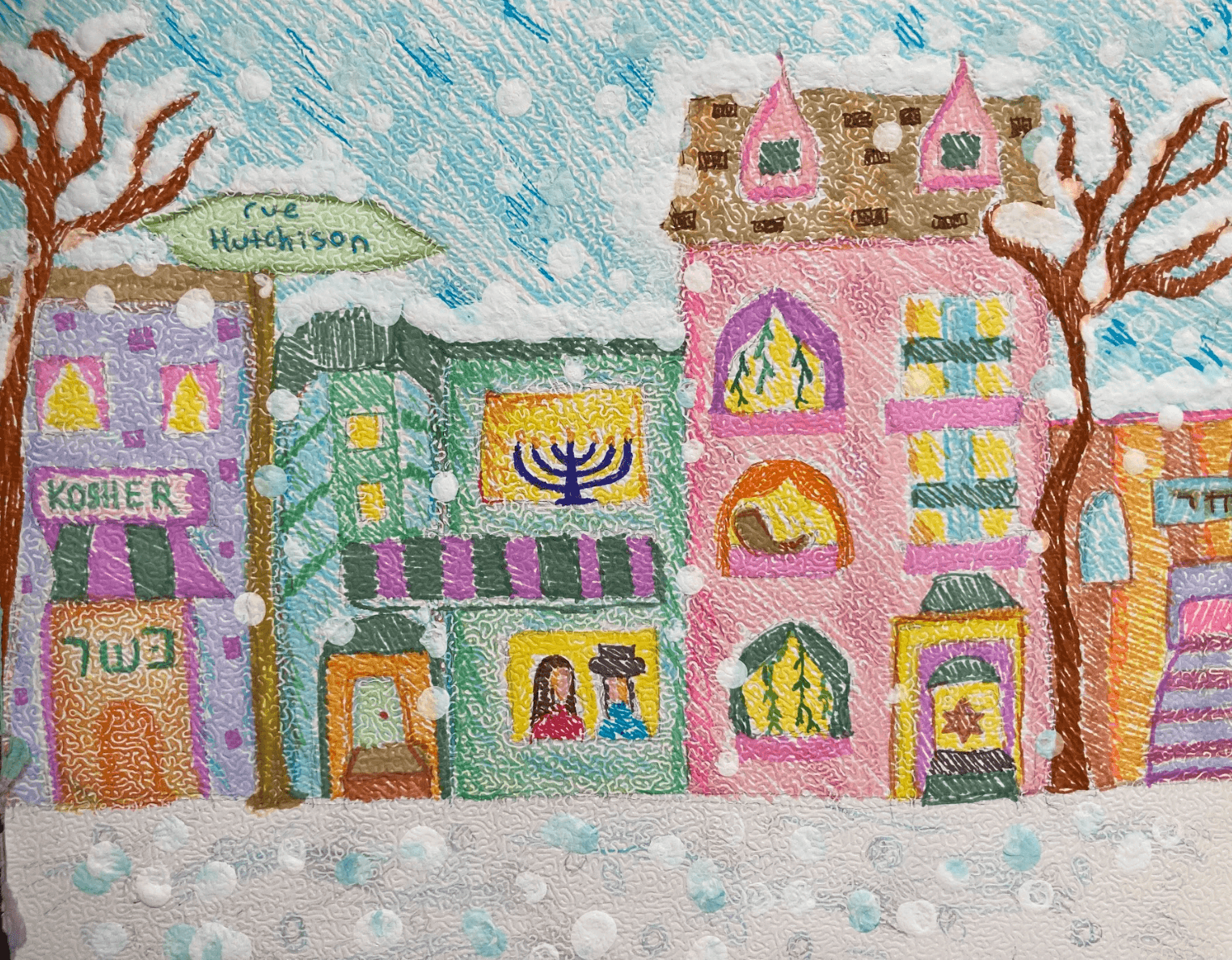
The Hasidic Jewish population is a fixture in the Mile End community, with particularly high concentrations of Hasidim on Rue Hutchinson. Families affix mezuzahs to doorframes and inscribe Hebrew lettering on their homes. An eruv, a symbolic boundary marked by a string border hung from telephone poles, the neighbourhood, allowing the Hasidim to carry objects on Shabbat. The Hasidim of the Mile End shop at local Kosher grocery stores and attend synagogue, with women wearing wigs or head coverings and modest clothing, and men dressed in black. Their dress is reminiscent of the Polish nobility of the 18th century, symbolic of the origins of Hasidic Judaism.
In recent decades, Mile End has evolved into a cultural hub, producing artists such as Grimes and Arcade Fire and drawing companies like Ubisoft to the area. Attracted by low rents, artists settle in the Mile End, followed by educated members of the creative class drawn to the vibrant scene. This influx led to gentrification and rising costs, resulting in degrees of displacement among the original residents. Although Mile End has largely remained a mosaic of creative professionals, immigrants, and working-class residents, the rise in cultural production and knowledge-based jobs has resulted in stratification. This shift marks a change in the historically more homogenous immigrant identity Mile End once held.
Despite these sweeping changes, the Hasidic community has maintained its cultural identity and spatial presence, unlike many previous Jewish populations who moved from Mile End to more established suburbs. This accomplishment is demonstrated through strong collective efficacy, distinct community-established third places such as synagogues and community centers, and the maintenance of a symbolic, non-traditional, ethnic enclave. This survival amidst post-industrial restructuring can be explained by examining cultural interactions, social capital, and the influence of the urban growth machine, as manifested through gentrification in Mile End.
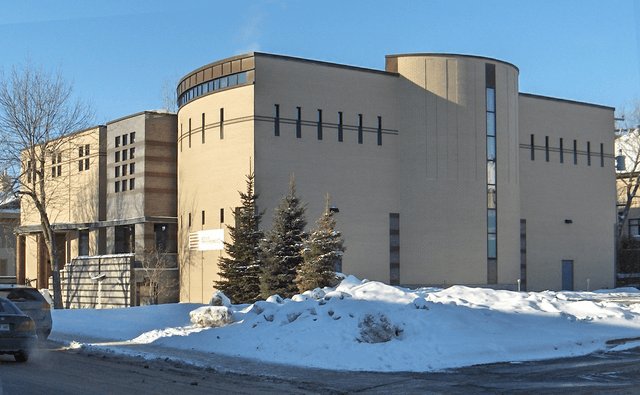
Cultural autonomy is maintained through institutions such as synagogues, community spaces like Chabad, and kosher markets, while coexisting alongside other ethnic groups. The Hasidim lack connection to their gentile neighbours, purposely limiting interactions as opposed to taking on stricter physical boundaries seen in traditional, more homogenized ethnic enclaves elsewhere. This divide is reinforced for future generations by the Hasidim, who run their children's educational institutions. Since Mile End is highly culturally and socioeconomically diverse, the Hasidim remain spatially and economically intertwined with their neighbours, despite deliberately limiting social and cultural interaction with those outside the community.
Mile End is a unique case study of urban transformation that examines the interplay between gentrification, cultural resilience, and socio-economic diversity following a post-industrial shift. While the neighbourhood has undergone significant changes and the influx of the creative class, the Hasidic Jewish community has maintained its presence through collective efficacy, cultural autonomy, and the establishment of a symbolic ethnic enclave. Mile End remains a multicultural mosaic, where historical immigrant roots, creative innovation, and cultural overlap showcase the complexities of urban evolution. The enduring presence of the Hasidim in Mile End demonstrates that strong Jewish and community ties foster resilience and preservation amid economic changes.
Powered by Froala Editor