

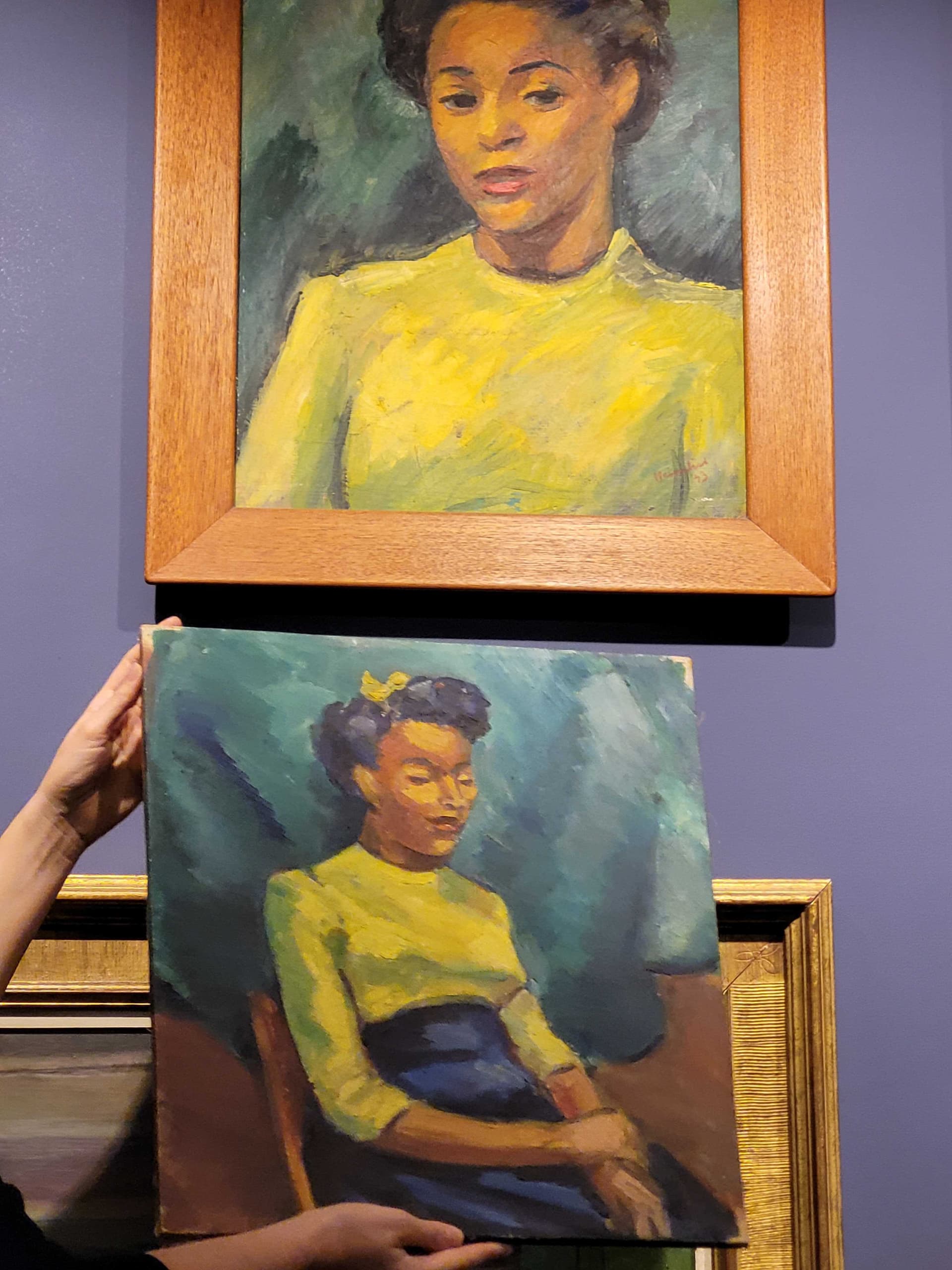

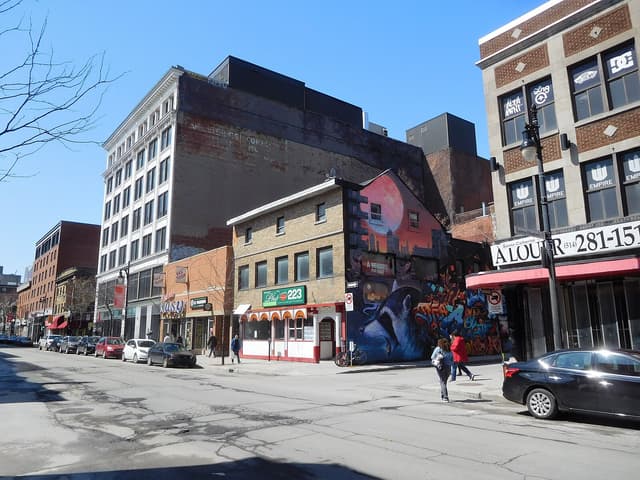
On a quiet Tuesday afternoon following winter break, a collection of faculty, students, and community members gathered to view a treasured selection of artwork by Canadian Jewish artists. A few of the artists spotlighted in the program and in McGill’s Visual Arts collection more broadly were Harry Mayerovitch, Ghitta Caisserman-Roth, Alfred Pinsky, Herman Heimlich, and Moe Reinblatt, whose unique worldviews and interactions in Montreal shaped their work. Whether it be a serene landscape of the Laurentians, or a grittier glimpse into the lives of working class immigrants in the Plateau, these artists took profound inspiration from their environments. Located in the Visible Storage Gallery on the fourth floor of McLennan Library, this viewing showcased vibrant portraits and a warm welcome from McGill Visual Arts Collection's curatorial team that provided a respite from the chaos of syllabus week.
These artists, often referred to as The Jewish Painters of Montreal, provide a window into the art movements that inspired Jewish artists, largely following global schools of Modernism and Fauvism. These urban creatives primarily painted portraits, often painting Jewish Canadian figures. One work that stands out is Herman Heimlich’s gorgeous rendering of composer Ethel Stark, proudly displayed in McGill’s Faculty Club. This curation was presented by McGill Visual Arts Collection’s Director of Curatorial Affairs, Gwendolyn Owens, and Curator, Michelle Macleod, both experts in understanding the centrality of Jewish artists to the cultural history of Montreal.
In an interview with Nu, Macleod expanded on the increasingly important role of public history in the age of the internet. “This collection is here to be discovered and to be engaged with,” encouraging students and faculty members to “come see the works in person because…it’s a transformative experience not to just see them online. The art at McGill is sort of hiding in plain sight sometimes … our job is to make people feel welcome to come explore and learn more.” The Visible Storage Gallery is open to the public on Monday through Friday from 10am to 6pm, boasting comfortable chairs perfect for relaxing and enjoying the art and company around you.
Many of the Jewish artists highlighted in this presentation trained in public spaces across the city in the mid 20th centuryMany of these artists took classes at Baron Byng High School and taught by influential Canadian female artist Anne Savage, providing a formative training in the arts. Additionally, the YMHA building on Mont-Royal Avenue was another community space in which residents of the primarily Jewish Plateau learned new art techniques after school or work, in many languages. One featured artist was Alfred Pinsky, a notable graduate of Baron Byng, who went on to become the director of Concordia University’s Fine Arts program. Many of the other featured artists make their living through gallery positions or selling works privately.
Macleod pointed out Jewish Montreal artists’ propensity for portraying darker urban scenes, in addition to vast Canadian landscapes, stating, “they were painting scenes of everyday life and of the urban experience and a bit more of this idea of social issues. Rita Briansky and Moe Reinblatt are painting poverty in the streets and in public parks, and they’re dark scenes of what the city would look like.” This view into the hardships faced by urban dwellers in Toronto and Montreal, especially among immigrants lacking financial resources, contrasts the idyllic scenes of colourful mountain ranges and prairie lands seen frequently in museum galleries. “These artists were painting another type of Canadian art that was very modern, and that had been less seen.”
This special event illuminated the rich cultural contributions of Jewish painters in 20th century Montreal. If you are curious about Mcgill's Visual Arts Collection, it extends beyond the Visible Storage Gallery on the 4th floor of McLennan Library and can be seen across over ninety buildings on campus. Take a look at their tour offerings. In an age where we are bombarded by images on our phone, it is refreshing to take part in in-person events where audience members can engage with art and art history, and more importantly with each other!
Powered by Froala Editor
-T2vbBmqJPcvYkT1kJPMA3jx0J0ZpHA.png&w=640&q=75)