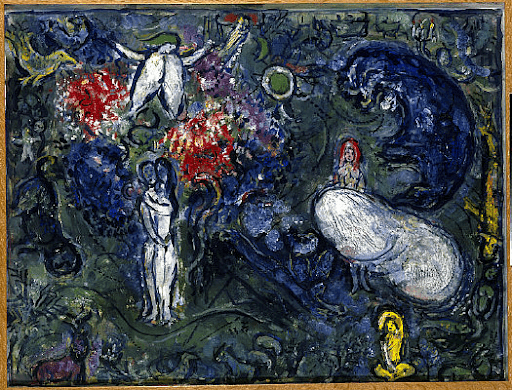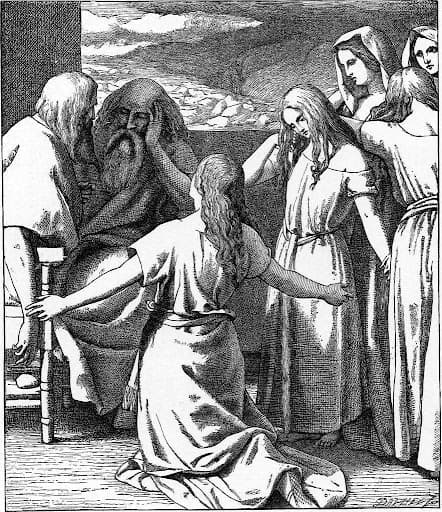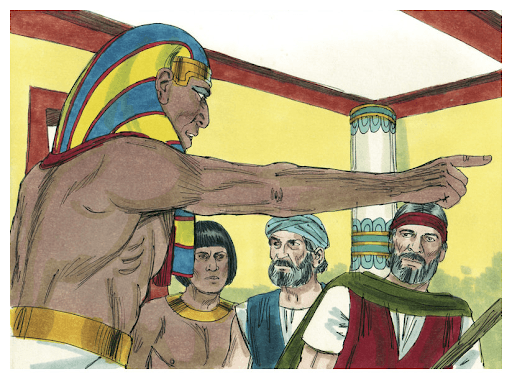


In his week’s Parasha Vaera, God instructs Moses to deliver a prophetic message to the enslaved Jews in Egypt. Under God’s direction, Moses must tell the Jews that God will free them “from the labours of the Egyptians.” When Moses imparts God’s message to the Jews, they do not believe him, as they are dispirited from years of “cruel bondage”. God then instructs Moses to approach Pharaoh directly and demand that the Jews be freed. Moses, however, is worried about his tendency to be “tongue-tied”— a phenomenon which Jewish scholars recognize as a speech impediment. He is afraid that Pharaoh will not listen to him, so to overcome this challenge, God sends Aaron, Moses’ brother, as a spokesperson to relay the prophetic messages on Moses’ behalf. The brothers approach Pharaoh several times and demand freedom for the enslaved Jewish population of Egypt. Pharaoh refuses, and God sends a series of plagues to strike the Egyptians. Even as the plagues afflict Egypt, Pharaoh continues to deny the freedom of the Jewish people.
Aaron’s role as Moses’ mouthpiece is often overlooked, but it reveals important lessons about advocacy and allyship. Moses, as a leader with what today might be considered a speech disability, requires Aaron to amplify his voice while retaining the authenticity of his messages. Aaron must not modify Moses’ messages, or else the entire Jewish population — and Moses’ relationship with God and the Jewish people — will be at grave risk. By listening to God’s instructions, and closely following the guidelines Moses sets for him, Aaron effectively relays the messages of the speech-impaired Moses while allowing Moses to retain a legacy among Jews as a strong and authoritative leader.
Aaron and Moses are unique, as most people are not prophets or leaders of nations. And of course, Moses is not “marginalized” in the traditional sense, as he is a high authority with abundant privilege. But their dynamic in which Aaron amplifies Moses’ physically disadvantaged voice can be applied to contemporary Jewish social justice and inclusion movements. Just as Aaron used his voice to project Moses’ voice, privileged groups of Jews must uplift the voices of disadvantaged groups.
To explore how this dynamic manifests, I spoke with Dr. Eric Caplan, an associate professor at McGill University who specializes in Jewish social activism. He explained that modern Jewish social justice movements tend to understand that, like Aaron centered Moses’ interests in projecting Moses’ voice, social advocacy should ultimately revolve around the interests of the disadvantaged group. For example, organizations that participate in Jewish Disability Awareness, Acceptance, and Inclusion Month effectively emphasize disabled Jewish voices, creating meaningful unions between privileged and marginalized groups.
Throughout Jewish history, though, there have been times when privileged groups have failed to honour the voices of marginalized groups. One example Dr. Caplan cited is a dynamic that is long prevalent in Jewish communities: the implicit exclusion of non-affluent Jews in synagogue settings. Dr. Caplan explained that while synagogues intend to provide open spaces for all Jews, the discussions and environments in many synagogues often center on expenses and affluence. Synagogues are often expensive to upkeep, with high membership and attendance costs, creating a passively exclusionary environment for lower-income Jews. As a consequence, lower-income Jews are marginalized within the Jewish world, with less influence and diminished feelings of acceptance in synagogue life. This same issue is found in other areas of Jewish life, like costly Jewish camps and youth movement memberships.
The lack of allyship between prominent Jewish communities begs the crucial question: how can we actively center marginalized Jews in Jewish spaces? How can Jews in privileged positions, who can influence Jewish spaces like synagogues or camps, amplify the messages of disadvantaged Jews? How can we harness Aaron’s strengths of cooperation present in Vaera? We must actively be aware of these dynamics so that we can work towards powerful intra-communal allyship in Jewish life.
There are many different ways to read Parashat Vaera, and while our vision of Moses is usually characterized by leadership, it’s striking to consider the limitations that he struggled with. Examining the roles of Aaron and Moses in the context of Moses’ speech impediment challenges us to assess our understandings of privilege, inclusion, and allyship in the Jewish and broader world.
Powered by Froala Editor