
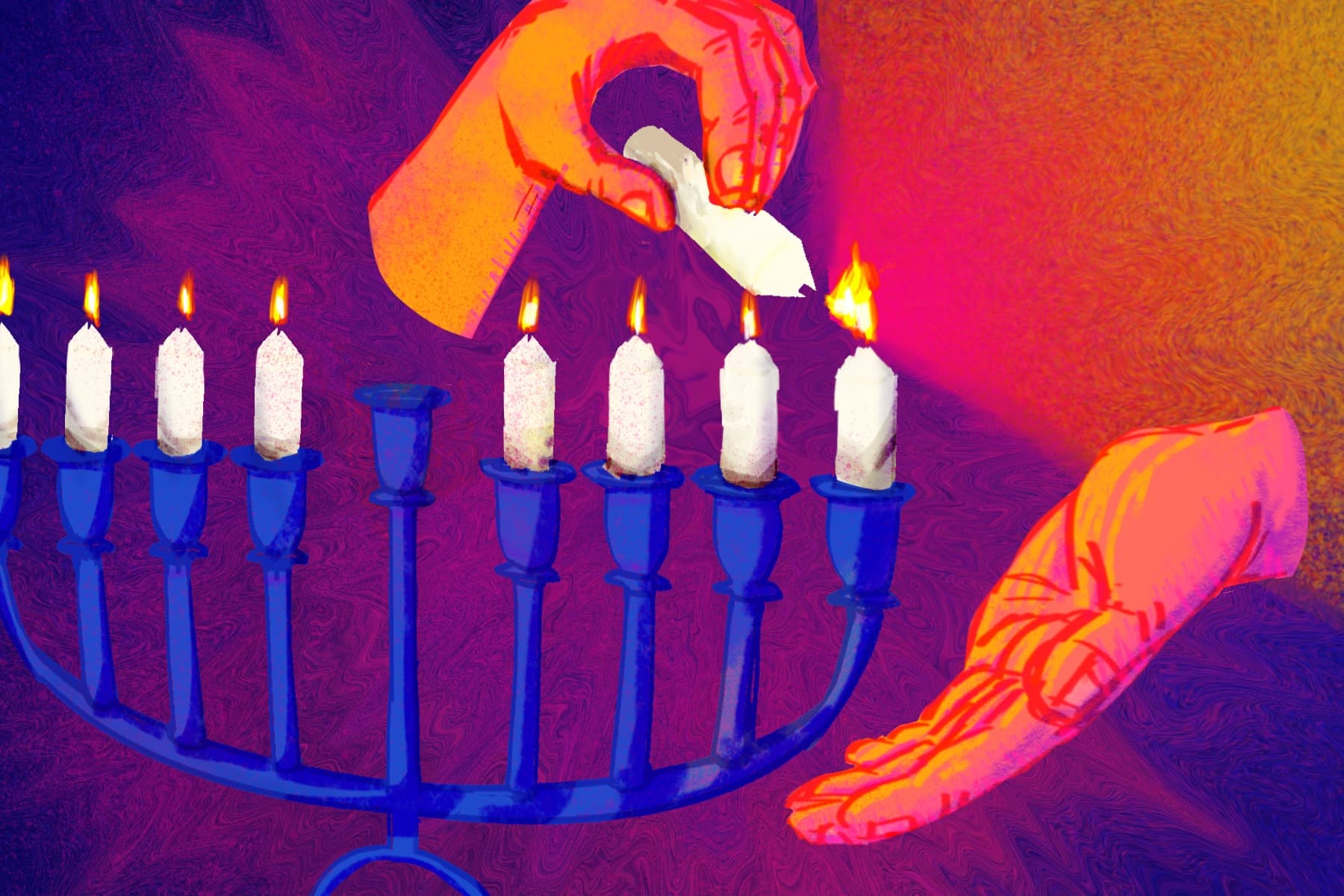

The festive warmth associated with Hanukkah is marked by menorahs in windows and gift giving. The latter association, though, is largely a result of the North American Christian-dominant system requiring religious minorities to assimilate into its calendar. Hanukkah’s proximity to Christmas helped assimilate Jewish tradition into Christian-American frameworks and “Americanized” Hanukkah into a touchstone of North American culture. However, the textual origins of the holiday are less about eight days of miraculous oil burning and gift giving and more so about a violent revolt.
Here’s a recap of the classic Hanukkah story: during the second century BCE, Antiochus and the Greeks outlawed Judaism and ruined the temple. The Maccabees, a Jewish extremist rebel group, fought the Greeks and drove them out, reclaiming the temple. This resulted in the miracle of oil for one day lasting for eight and Hanukkah’s emergence as a minor eight-day feast holiday.
Like many stories learned in Hebrew school, the detailed history is more complex. The Seleucid Greeks did occupy historical Judea, and the Maccabees did drive them out. However, another group was stuck between the Greeks and the Maccabees: Hellenist Jews. The majority of Jews were assimilating into Greek culture and syncretizing Judaism with Greek religion. Although today it seems completely counterintuitive to reconcile a monotheistic and polytheistic religion, at the time, syncretization was common.
Before the Maccabees fought the Greeks, they battled the Hellenist Jews. This was not a tense ideological disagreement but a violent battle for control of Judea and Jewish identity. Historians suggest that the Greeks intervened on behalf of the Hellenist Jews, resulting in the Maccabees driving the Greeks from Judea.
The Book of Maccabees was not incorporated by early rabbis into the Tanakh, but the story was preserved in the Greek Septuagint in the Christian canon. There are many reasons why the rabbis may have omitted the Maccabees from the Tanakhic canon. One theory states that they did not want to glamorize the violent acts of the Maccabees against fellow Jews. The rabbis were in exile and likely sympathetic to the idea of fighting and defeating exile-inducing oppressors. The diaspora also meant a diversification of Jewish tradition separate from top-down priestly authority and the rabbis may have wanted to avoid the rhetoric of violently pursuing other Jews when there was a greater oppressor.
There is no intrinsic issue with the Maccabees being anti-assimilationist; rather, the problem lies in the means they used to assail the Hellenist Jews. The Maccabees’ means of bringing about change was not convincing other Jews of their arguments, but violently enforcing their vision onto the community. They usurped the legally decisive power of the High Priest to allow fighting on Shabbat and to violate the broad prohibition of murder in the Torah. They felt justified in their actions to the degree that they violated Jewish law repeatedly and attacked fellow Jews. Part of telling the Hanukkah story should include a reckoning with their zealotrous ethics. Judaism has a history of violent extremists, but also a tradition of peacebuilding and vibrant disagreement. Learning from violent hatred and mistakes is just as important as celebrating Jewish triumphs.
Jews today must learn to make a positive argument for what we believe instead of violently and coercively enforcing one vision. Judaism is not a static tradition; it has evolved immensely through debate and argument. This Hanukkah, let us continue this beautiful tradition of real disagreement and argument, not one of excommunication and polarization.
Powered by Froala Editor