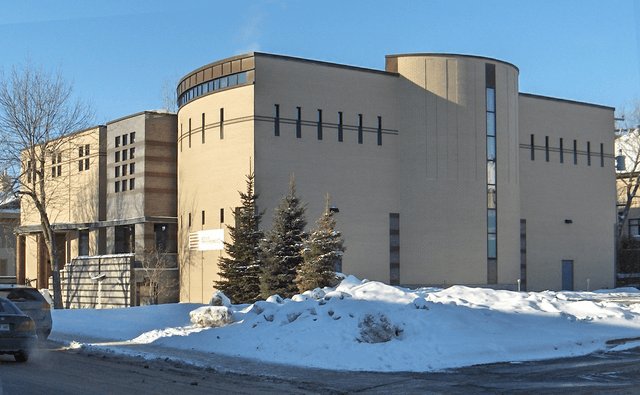


In 2023, Mount Sinai Hospital in Toronto celebrated its centennial anniversary. If you’ve never heard of the hospital, ask anyone from Toronto and you will quickly find someone enthusiastically exclaiming that they, their siblings, and generations of their family since the founding of Mount Sinai were born there. Despite its cultural and sentimental relevance, most are unaware of the institution's original name: The Hebrew Convalescent and Maternity Hospital.
This name was given by its founders, a small, driven group of Jewish women led by Dorothy Dworkin. These women felt that the healthcare needs of Toronto’s Jewish community were unmet, particularly for pregnant women in need of a safe and comfortable, but halachically adherent, place to give birth. To address this gap, the four women, as a part of the Ezra Noshem Society, went door to door collecting the funds needed to bring their vision to life.
As an immigrant who worked in healthcare from the age of seventeen, Dworkin intimately understood the wariness of Jewish immigrants towards non-Jewish hospitals. So, in addition to providing more adept maternal care, Dworkin sought to create a hospital where the linguistic, financial, and dietary needs of Jewish immigrants were met. With a down payment on a property in Downtown Toronto in the spring of 1922, she and her associates had put the plan into motion.
The Hebrew Convalescent and Maternity Hospital became a welcoming and trusted institution for patients and healthcare providers alike, just as Dworkin had envisioned. It was one of the first places in Toronto where Jewish doctors were allowed to practice medicine. Since then, the hospital has grown exponentially, moved locations, and changed its name to Mount Sinai Hospital. Today, the hospital’s Jewish roots remain relevant. Joseph Mapa, the CEO of Sinai Health Foundation, has spoken about how Jewish values are present in the hospital: “From the very beginning, our founders wanted to build a hospital that opened its doors to the most vulnerable patients, fulfilling values such as pikuach nefesh [saving a life], bikur cholim [visiting the sick] and tikkun olam [repairing the world].” Not only does it operate with an ethos filled with Jewish values, but the hospital also offers a synagogue, a Shabbat elevator, and Kosher meals.
The Jewish people’s connections to healing date back far earlier than 1923. Torah scholars accept that Jews are encouraged, and even obligated, to participate in healthcare. This interpretation stems from verses like Exodus 21:19, which says that when one injures another person, he must “surely heal” that person. Maimonides, a physician, rabbi, and philosopher, saw medical care as part of the duty to return to a person “anything he has lost” (Deuteronomy 22:3). Jewish principles also offer insight when contemplating complex ethical issues in medical decision-making, specifically when it comes to patients who cannot speak for themselves. The responsibility to care for others, especially those whose voices often go unrepresented, is a value embedded in the beating heart of Mount Sinai Hospital.
Mount Sinai Hospital’s one hundred and two years exemplify Jewish excellence in healthcare. From its humble beginnings as an idea shared at people’s doorstep to one of the world’s most celebrated hospitals, the hospital models building a values-based space from the ground up. The origin story of Mount Sinai’s Jewish care and healing encourages us to reflect on how actions and activism can become legacies that serve communities for generations to come.
Powered by Froala Editor