


In Ben Gonshor’s debut novel, The Book of Izzy, Montréal hums with the ghosts of the Yiddish language. Off his medication and trapped in a job he despises, Izzy, the novel’s troubled protagonist, mourns the loss of his grandfather's generation of Montréal Yiddish speakers. This sadness is not confined to Izzy’s character – Gonshor shares the deep feeling of loss for the disappearance of the Yiddish language, as Yiddish was his first language.
Despite the language’s general decline in our world, Yiddish is used fluidly on almost every other page of The Book of Izzy. Instead of relying on Yiddish terms that are common in our English vernacular (such as schlep or shmuck), Gonshor uses words like narishkeit (foolishness) or pekl (a small package). A third of the way through the novel, Izzy breaks the fourth wall and decides to put footnotes with English translations of Yiddish terms to make it easier for the reader.
In the first chapters, Izzy attends the funeral of his late grandfather’s final surviving friend, Knekht, whom he describes as “the last of my zaide’s generation, the likes of whom we’ll never fucking see again.” He later complains to his mother that “nobody was at the fucking funeral,” emphasising that this was the “last one” of his grandparents’ generation.
Throughout the rest of the novel Izzy wrestles with guilt for disappointing this bygone generation of Yiddish-speaking Jewry. Many Jews can relate to this sentiment — anxiety that the language and culture of Eastern European Jews is decreasing in favour of assimilation, especially given today’s dwindling number of native Yiddish speakers and Holocaust survivors.
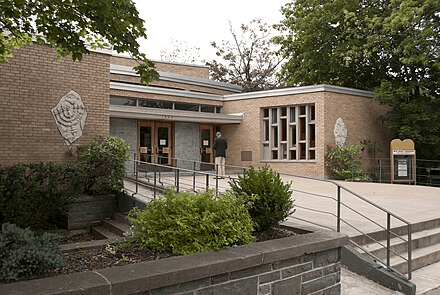
One central plot point is Izzy’s decision to star as the lead role of Khonen in a theater production of The Dybbuk, a classic work of Jewish theatre depicting the possession of a woman by an evil spirit (dybbuk). Gonshor himself has played Khonen in two productions of The Dybbuk with the Dora Wasserman Yiddish Theater in Montréal, a role that affected him greatly. When Izzy meets Sue-Ann, who will play Lea, the leading woman and Khonen’s lover, he is disgusted to find out that she speaks only rudimentary Yiddish. He rants that Yiddish culture is often seen as something “cool, modern, and progressive,” making it “easily appropriated.”
As a child, Gonshor spoke Yiddish with his grandparents, who immigrated to Montréal from Poland. However, as Gonshor explained in an interview with Nu, there were “less and less people to speak it with” after his grandparents passed. Today, he rarely uses Yiddish. Mourning how “Yiddish has not been passed on as a living, breathing, day-to-day language” outside some ultra-orthodox communities, Gonshor sees his novel as a way of saying goodbye to a generation of people who “we are never going to experience again.”
Although Gonshor doesn’t see Izzy as a fictionalized version of himself, he believes that Izzy’s thoughts on the appropriation of Yiddish culture have merit. “Because Yiddish is less connected to an alive speaking population, it’s not owned by anyone anymore,” Gonshor said. “Anyone can do what they want with it.” As Izzy “comes from a background which is very rooted [in Yiddish culture]”, he is “challenged by a reality of people who aren’t rooted but still have an interest [in Yiddish].” He worries that people like Sue-Ann “are trying to take possession of something for their own purposes,” an anxiety he comes to terms with by the end of the book.
The Book of Izzy is a heartfelt homage to the Yiddish-speaking immigrants of Montréal. It expresses how we can continue to keep Yiddish culture alive through plays like The Dybbuk, while grappling with challenges facing native speakers like appropriation. As Gonshor describes it, “I only understood later, after the book was published, that I needed to write this as a way of saying goodbye, as a way of saying thank you, to that generation of survivors and Yiddish speaking people.”
Buy The Book of Izzy at Bibliophile Montreal https://bibliophilemontreal.com/
5519 Queen Mary Road
Montreal, Quebec
H3X 1V4
Powered by Froala Editor